The logistics industry has always been about movement—moving products, information and resources where they need to be, when they need to be there. Today, technology is changing how that movement happens.
From better inventory visibility to smarter transportation decisions, modern logistics tools are helping companies improve efficiency, respond faster and make more informed decisions across their supply chains.
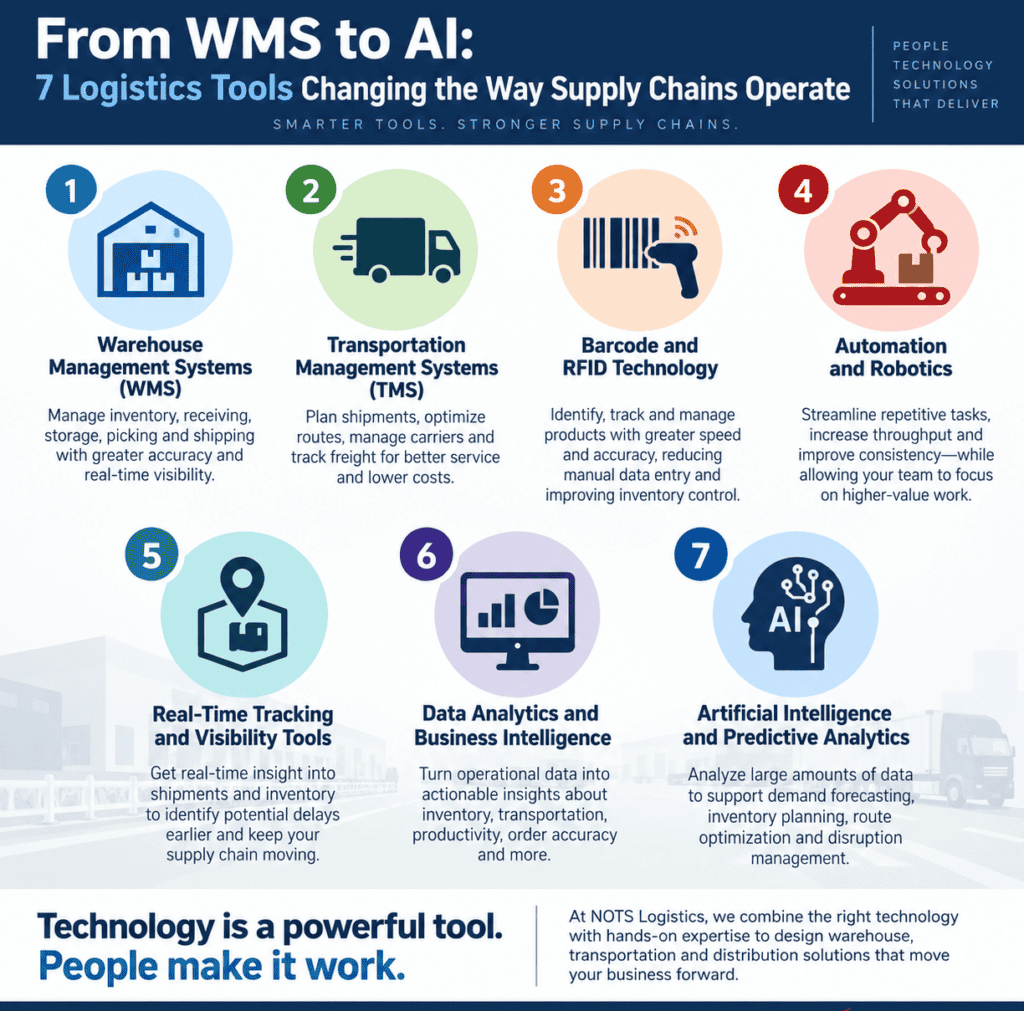
Here are seven logistics tools helping shape the way supply chains operate.
Table of Contents
1. Warehouse Management Systems (WMS)
A Warehouse Management System is at the center of many modern warehouse operations. A WMS helps manage inventory, receiving, storage, picking, shipping and other day-to-day activities within a facility.
More importantly, it provides visibility. Businesses can better understand where inventory is located, how product is moving and where opportunities exist to improve efficiency.
For a 3PL partner, a strong WMS can also provide customers with greater accuracy and transparency throughout the warehousing process.
2. Transportation Management Systems (TMS)
Moving freight efficiently requires much more than getting a truck from Point A to Point B.
Transportation Management Systems help logistics teams plan shipments, optimize routes, manage carriers, track freight and analyze transportation performance. With better information available throughout the process, companies can make smarter decisions about how products move through their supply chains.
The result can be improved service, greater visibility and better control of transportation costs.
3. Barcode and RFID Technology
Knowing exactly where inventory is located is essential to an efficient warehouse.
Barcode scanning and Radio Frequency Identification (RFID) technology help logistics teams identify, track and manage products as they move through a facility or supply chain. These tools can reduce manual data entry, improve inventory accuracy and help ensure the right products reach the right destinations.
When combined with a WMS, this technology can provide an even clearer picture of inventory movement.
4. Automation and Robotics
Automation continues to change how work gets done inside warehouses and distribution centers.
Conveyors, automated storage and retrieval systems, robotic picking solutions and other technologies can help streamline repetitive processes, improve consistency and increase throughput.
But automation isn’t necessarily about removing people from an operation. In many cases, it’s about allowing technology to handle repetitive tasks while employees focus on work that requires judgment, problem-solving and flexibility.
5. Real-Time Tracking and Visibility Tools
Today’s customers expect to know where their products are—and businesses need that same visibility to effectively manage their operations.
Real-time tracking tools provide greater insight into shipments, inventory and logistics activity as it happens. Instead of waiting for a problem to surface, teams can identify potential delays or disruptions earlier and respond accordingly.
That visibility can be especially valuable when managing complex supply chains involving multiple facilities, customers and transportation partners.
6. Data Analytics and Business Intelligence
Logistics operations generate an enormous amount of data. The real value comes from knowing what to do with it.
Analytics and business intelligence tools can turn operational data into useful information about inventory levels, transportation performance, productivity, order accuracy, customer demand and more.
When logistics providers and their customers understand the story behind the numbers, they can identify trends, uncover inefficiencies and make more informed decisions about future operations.
7. Artificial Intelligence and Predictive Analytics
Artificial intelligence is quickly becoming another valuable tool in the logistics toolbox.
AI can help analyze large amounts of information, identify patterns and support decisions related to demand forecasting, inventory planning, route optimization, labor needs and potential supply chain disruptions.
Rather than replacing the people behind logistics operations, one of AI’s greatest opportunities is giving those people better information and more time to focus on decisions that require experience, relationships and problem-solving.
Technology Is Only Part of the Solution
The right logistics tools can provide better information, greater visibility and new opportunities for efficiency. But technology alone doesn’t move a supply chain.
It still takes experienced people, strong processes and the ability to adapt solutions to the needs of each operation.
At NOTS Logistics, we combine technology with hands-on expertise across warehousing, transportation management, customized distribution and workforce management. Because the most effective logistics solution isn’t simply about having the latest tools, it’s about knowing how to put the right tools, people and processes to work for your business. And that’s exactly what we do best.
Ready to build a smarter supply chain? Let’s discuss a solution designed around your operation.